- Ananth Residency, Sadashiv Nagar, Belagavi, Karnataka 590019
- Get Location
- +91 8904178867
- 383rohan@gmail.com

 Advanced Orthopaedic, Joint Replacement & Spine Care Center
Spine Care – Dr. Rohan
UBE Endoscopic Spine Surgery
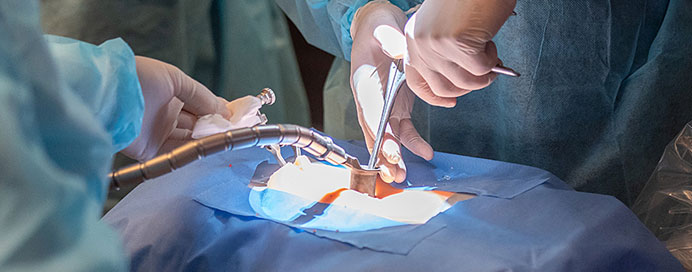
UBE (Unilateral Biportal Endoscopic) Spine Surgery is a modern, minimally invasive spine technique that uses two small portals (incisions) to treat various spinal disorders. One portal is used for the endoscopic camera, while the other is used for surgical instruments. This biportal approach provides a wider and clearer surgical view compared to traditional endoscopic techniques, allowing precise decompression of nerves with minimal muscle damage. UBE is especially effective for lumbar spine problems and offers faster recovery with reduced post-operative discomfort.
Key Advantages of UBE Endoscopic Spine Surgery
- Two-Portal Technique: Separate portals for the camera and instruments provide better visualization and improved surgical control.
- Minimal Muscle Injury: Muscles are gently separated rather than cut, preserving spinal stability and reducing trauma.
- Less Blood Loss: Smaller incisions and precise dissection result in minimal bleeding during surgery.
- Faster Recovery: Most patients experience early mobilization and shorter hospital stay compared to open surgery.
- Reduced Post-Operative Pain: Because soft tissue damage is minimal, patients usually report less pain after surgery.
Conditions Treated with UBE Surgery
UBE Endoscopic Spine Surgery is commonly used to treat lumbar disc herniation (slipped disc), sciatica, spinal canal stenosis, foraminal stenosis, and selected cases of spinal instability. It is particularly beneficial for patients who have persistent nerve compression symptoms not responding to conservative treatment.
Advanced Visualization & Precision
UBE surgery uses a high-definition endoscopic camera with continuous saline irrigation, which provides a clear and magnified view of the surgical field. This enhanced visualization allows accurate nerve decompression while protecting surrounding structures, leading to safer outcomes and quicker return to daily activities.