- Ananth Residency, Sadashiv Nagar, Belagavi, Karnataka 590019
- Get Location
- +91 8904178867
- 383rohan@gmail.com

 Advanced Orthopaedic, Joint Replacement & Spine Care Center
Joint Replacement – Dr. Pooja
Total Hip Replacement
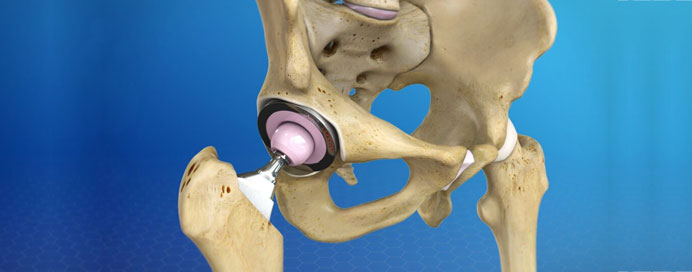
Total Hip Replacement (THR) is a highly successful surgical procedure performed to relieve severe hip pain and restore mobility in patients with advanced hip joint damage. In this surgery, the damaged femoral head (ball) and acetabulum (socket) are removed and replaced with artificial implants made of metal, ceramic, or high-grade polyethylene. It is commonly recommended for patients with osteoarthritis, rheumatoid arthritis, avascular necrosis, or post-traumatic arthritis when non-surgical treatments fail to provide relief. The primary goal of total hip replacement is to reduce pain, improve joint function, and enhance overall quality of life.
Benefits of Total Hip Replacement
- Significant Pain Relief: Most patients experience dramatic reduction or complete relief from chronic hip pain.
- Improved Mobility: The procedure restores smoother joint movement, making walking and daily activities easier.
- Better Joint Stability: Modern implant designs provide excellent stability and reduce the risk of dislocation.
- Correction of Deformity: THR helps correct leg length discrepancies and joint deformities caused by arthritis or injury.
- Long-Lasting Results: With advanced materials and surgical techniques, hip implants can last 15–20 years or more.
Surgical Procedure & Technique
Total hip replacement can be performed using various surgical approaches, including posterior, lateral, or anterior techniques. The choice depends on the patient’s anatomy, underlying condition, and surgeon’s expertise. Advanced methods such as minimally invasive surgery and computer-assisted navigation help improve precision and recovery outcomes.
The damaged bone and cartilage are carefully removed, and the artificial components are securely placed to recreate the natural hip joint. Accurate alignment and stable fixation are essential to ensure long-term success and proper joint function.
Recovery & Rehabilitation
After surgery, early mobilization is encouraged, often within 24 hours. Physiotherapy plays a vital role in restoring strength, balance, and range of motion. Most patients can resume normal daily activities within a few weeks, though complete recovery may take a few months.