- Ananth Residency, Sadashiv Nagar, Belagavi, Karnataka 590019
- Get Location
- +91 8904178867
- 383rohan@gmail.com

 Advanced Orthopaedic, Joint Replacement & Spine Care Center
Spine Care – Dr. Rohan
Spine Fixation Surgery
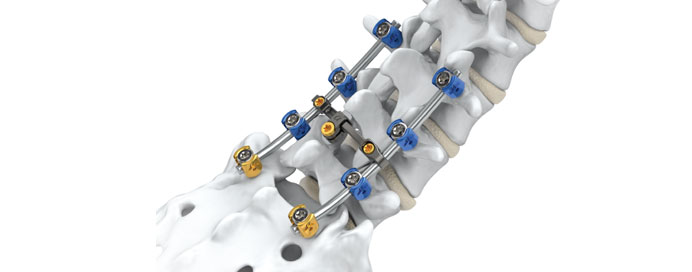
Spine Fixation Surgery is a procedure performed to stabilize the spine when there is instability due to trauma, degenerative disease, deformity, tumor, or infection. It involves the use of specialized implants such as screws, rods, plates, or cages to hold the vertebrae in proper alignment. The main objective of spine fixation is to restore spinal stability, relieve nerve compression if present, correct deformity, and prevent further progression of spinal damage. Modern techniques allow both open and minimally invasive approaches, depending on the patient’s condition.
When is Spine Fixation Required?
Spine fixation may be recommended in cases of:
- Spinal fractures or traumatic instability
- Severe spondylolisthesis (vertebral slip)
- Spinal deformities such as scoliosis or kyphosis
- Degenerative spine disease causing instability
- Tumors or infections weakening the spinal structure
Types of Spine Fixation Techniques
- Pedicle Screw Fixation: Pedicle Screw Fixation
- Spinal Fusion: Two or more vertebrae are fused together using bone grafts along with implants.
- Minimally Invasive Fixation: Small incisions and image guidance are used to insert screws with less muscle damage.
- Interbody Cage Placement: A cage is inserted between vertebrae to maintain disc height and promote fusion.
Recovery & Outcomes
Recovery depends on the extent of surgery and the underlying condition. Many patients experience significant pain relief, improved spinal stability, and better mobility after proper rehabilitation. With advanced surgical planning, navigation systems, and neuromonitoring, spine fixation surgery today is safer and provides reliable long-term results.