- Ananth Residency, Sadashiv Nagar, Belagavi, Karnataka 590019
- Get Location
- +91 8904178867
- 383rohan@gmail.com

 Advanced Orthopaedic, Joint Replacement & Spine Care Center
Spine Care – Dr. Rohan
Emergency Orthopaedic Trauma Care
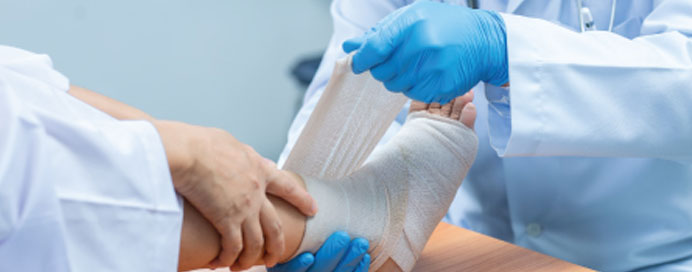
Emergency Orthopaedic Trauma Care focuses on the rapid assessment and treatment of bone, joint, and musculoskeletal injuries caused by accidents, falls, sports injuries, or violence. These injuries may include fractures, dislocations, ligament tears, and complex polytrauma cases. Immediate and structured management is essential to relieve pain, prevent complications, control bleeding, and preserve limb and life. Early intervention significantly improves recovery outcomes and reduces long-term disability.
Initial Assessment & Stabilization
The first priority in orthopaedic trauma care is following advanced trauma protocols to stabilize the patient. Airway, breathing, and circulation (ABC) are assessed immediately. Fractures are immobilized using splints or braces to prevent further damage, reduce pain, and control bleeding. In severe injuries, emergency surgery may be required to stabilize the patient.
Key Components of Trauma Care
- Rapid Clinical Evaluation: A thorough physical examination is performed to assess deformity, swelling, open wounds, nerve injury, and vascular status. Early identification of life-threatening injuries is critical.
- Advanced Imaging: X-rays, CT scans, or MRI are used to accurately diagnose fractures, joint dislocations, or complex injuries, allowing precise treatment planning.
- Fracture Stabilization: Temporary or definitive stabilization using splints, traction, external fixators, or internal fixation helps restore alignment and reduce further tissue damage.
- Surgical Intervention: Open fractures, unstable injuries, or multiple trauma cases often require emergency surgery using plates, screws, rods, or external fixation devices to stabilize bones and joints.
- Rehabilitation & Follow-Up: After initial management, structured physiotherapy and regular follow-up ensure proper healing, restore strength and mobility, and prevent long-term stiffness or deformity.
Recovery & Long-Term Care
Timely and coordinated orthopaedic trauma management not only saves lives but also preserves limb function. With modern surgical techniques, advanced implants, and comprehensive rehabilitation programs, most patients achieve successful recovery and return to normal daily activities.